TEST RECORD
- DATE
- November 25, 2026
- DESK
- COATINGS & PAINTS
- READ TIME
- 3 MIN
- WORDS
- 658
$150,000 laser-cladding project tests tungsten carbide alternatives
A $150,000 AMCRC collaboration will test titanium carbide and tungsten carbide composites for mining wear parts before industrial-scale trials at LaserBond’s Cavan facility.
SPECIFICATION
- 1
$150,000 funds the AMCRC collaboration between LaserBond, Adelaide University and Swinburne University of Technology.
- 2
Two coating pathways are under review: titanium carbide and agglomerated tungsten carbide composites.
- 3
Four tests—abrasion, corrosion, impact and erosion—will benchmark candidates against existing hardfacing and hard chrome.
- 4
Industrial-scale trials at LaserBond’s Cavan facility will combine digital acoustic crack monitoring with higher deposition rates.
A $150,000 Additive Manufacturing Cooperative Research Centre (AMCRC) project brings together three Australian organisations to develop alternative wear-resistant coatings for manufacturing and mining.
Surface engineering company LaserBond, Adelaide University and Swinburne University of Technology will investigate titanium carbide (TiC) and agglomerated tungsten carbide composites as potential replacements for fused tungsten carbide used in high-performance laser claddings.
Why does tungsten supply matter?
Tightening global tungsten supplies are increasing costs and creating supply-chain risks, according to AMCRC. The project aims to cut reliance on constrained tungsten chains while developing cost-effective coatings that meet the wear-resistance requirements of Australia’s mining sector.
The work builds on promising early research into TiC as an alternative to conventional tungsten carbide coatings. TiC could open access to a more diverse supply base and reduce raw-material costs, while agglomerated tungsten carbide composites provide another research pathway.
LaserBond R&D Engineer and project lead Dr Surinder Singh said:
“Our customers rely on these coatings to protect critical assets operating in some of the harshest conditions, so simply waiting for global supply to stabilise isn’t an option.”
That makes the work a supply-continuity exercise as much as a materials project. Singh said the project could give customers greater supply certainty, potentially reduce costs and strengthen Australian manufacturing capability.
AMCRC Managing Director Simon Marriott said the collaboration shows how industry-led research can respond to global supply-chain pressure. Pairing industry and researchers around a pressing commercial need, he said, can yield practical solutions while building more resilient, competitive Australian manufacturing capability.
For coating buyers, the prize is a qualified material that reduces tungsten exposure and raw-material cost.
Which materials and tests come first?
Initial development will focus on wear-prone mining components. The team will subject candidate coatings to four qualification tests:
- Abrasion testing will measure resistance to surface wear.
- Corrosion testing will assess resistance to chemical attack.
- Impact testing will check performance under sudden loading.
- Erosion testing will examine material loss in service.
LaserBond’s existing hardfacing materials and hard chrome will provide the benchmark. The comparison will establish whether the new systems can serve as production-ready alternatives rather than simply promising laboratory formulations.
Adelaide University research lead Industry Professor Colin Hall set the industrial threshold:
“The coating also has to perform, be deposited crack-free at production speed and withstand demanding operating environments.”
The practical test is straightforward: the coating must survive mine service and deposit without cracks at production speed.
Can the coatings scale from lab to plant?
Swinburne University of Technology will lead early materials and cladding development. The team will then move promising solutions into industrial-scale trials at LaserBond’s Cavan facility.
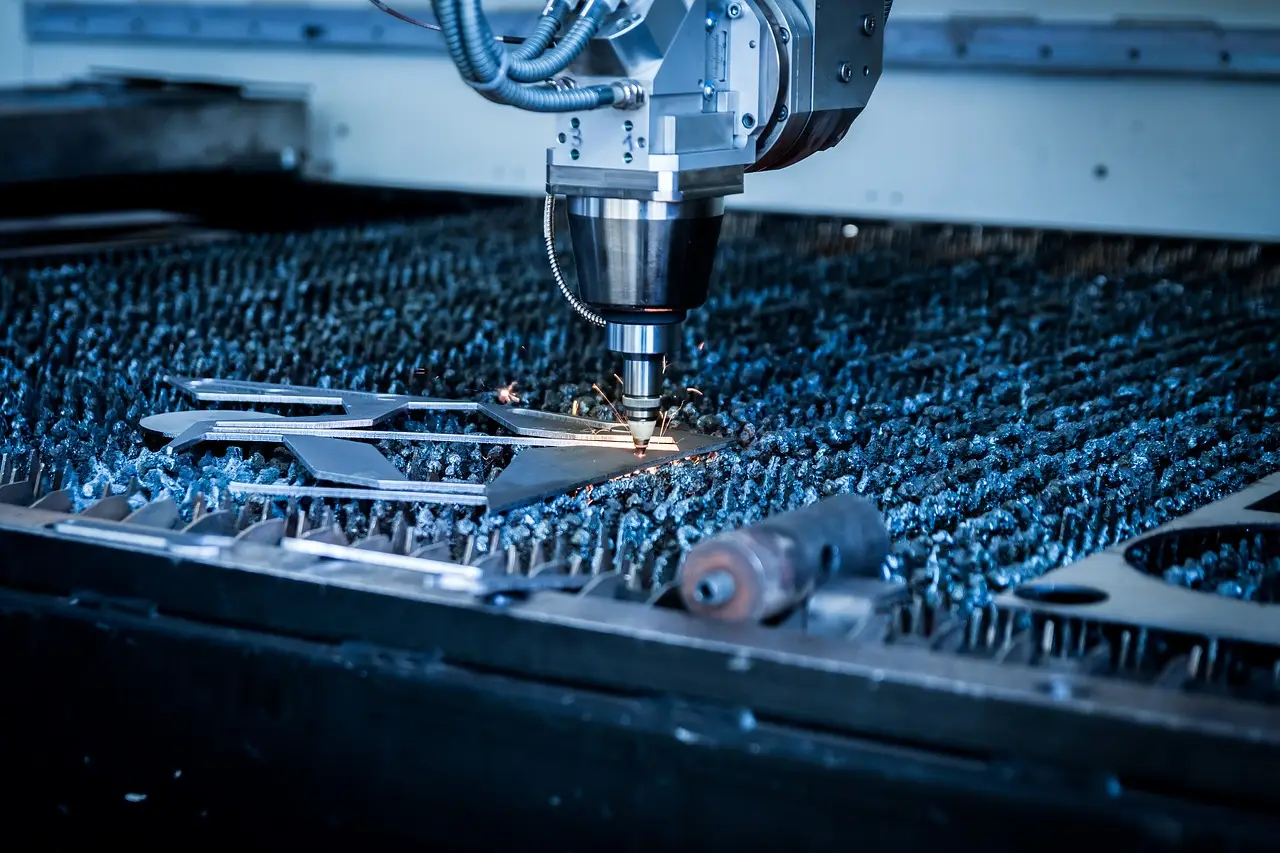
AMCRC said the team will deploy a digital acoustic monitoring system at Cavan to detect cracking during laser cladding deposition. Combined with higher deposition rates, the system would help optimise coating performance and assess materials for industrial production, according to AMCRC.
Swinburne lead researcher Associate Professor Andrew Ang said moving quickly from material development into rigorous testing and simulated field trials would identify the solutions with the strongest pathway into industry.
Cavan gives the project its production test: crack detection and faster deposition must confirm that a promising material works beyond the lab.
What does success mean for mine operators?
The collaboration ultimately aims to deliver a cost-competitive, wear-resistant coating backed by a more secure supply chain. Mining provides the initial development target, with potential applications in other industries where wear resistance is critical.
The $150,000 program spans a three-party effort, two coating pathways, four coating tests, simulated field trials and industrial-scale trials at Cavan. No commercial price, coating volume or launch date has been announced.
For mine operators, fabricators and coating buyers, the decisive outcome will be a coating that survives field conditions and can be applied at production speed, not merely a substitute with a broader supply base.
via Google News — Coatings Industry (Source)
More from Marcus Bennett
Show full bio
Correspondent covering money, funding and market shifts around Chemicals Weekly is the trade press at Chemicals Weekly.
67 articles