TEST RECORD
- DATE
- November 19, 2026
- DESK
- SPECIALTY CHEMICALS
- READ TIME
- 3 MIN
- WORDS
- 664
Chromium stabilizes ruthenium in water electrolysis catalysts
Chromium atoms buffer oxidation at neighboring ruthenium sites, improving durability in single-atom catalysts for water electrolysis without sacrificing catalytic activity.
SPECIFICATION
- 1
A 2026 Nature Materials paper reports that chromium buffers oxidation in neighboring single-atom ruthenium sites for water electrolysis.
- 2
Chromium and ruthenium atoms couple through oxygen bridges inside an oxide scaffold.
- 3
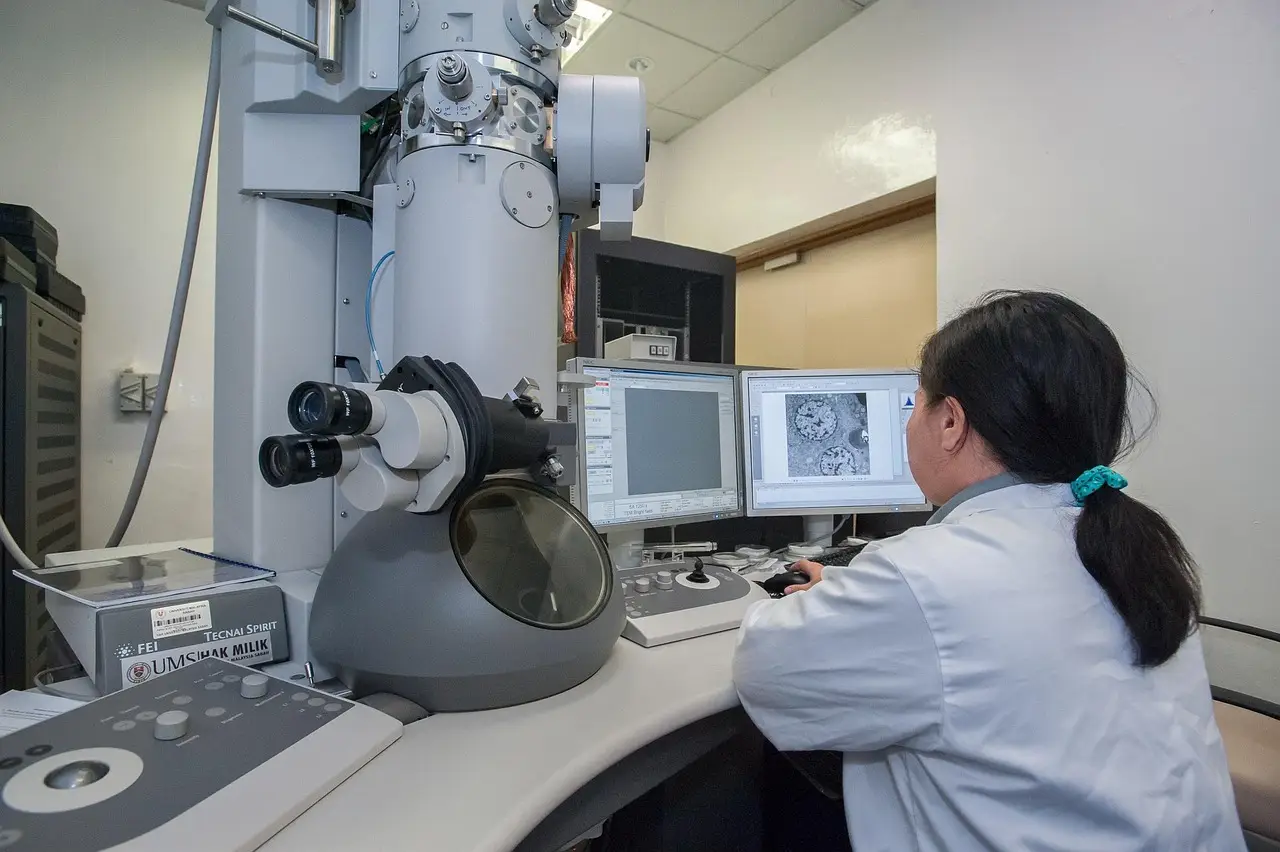
Two characterization methods—electron microscopy and synchrotron spectroscopy—were used to observe the atomic interaction.
- 4
The 14-author paper carries DOI 10.1038/s41563-026-02783-4.
- 5
Six research institutions collaborated with ICFO on the study.
A 2026 Nature Materials study led by ICFO identifies chromium as a stabilizer for single-atom ruthenium catalysts used in water electrolysis, the reaction that splits water to produce green hydrogen. Neighboring chromium and ruthenium atoms formed oxygen-bridged units that restrained excessive oxidation while preserving catalytic activity.
Why does ruthenium need a stabilizer?
Ruthenium already serves in single-atom catalysts that speed up water electrolysis. Used on its own, however, the metal tends to over-oxidize and dissolve during operation. That combination puts a premium on durability for a catalyst built around a scarce precious metal.
Tengyu Chen, first co-author, said: “Many people know that chromium helps stainless steel resist corrosion. So we wondered whether it could also be a great partner for restless ruthenium, and began to explore its protective role at the atomic scale.”
The team tested that idea through catalyst design. Its synthesis method brought ruthenium and chromium atoms into close proximity within an oxide scaffold, allowing the researchers to study how the neighboring atoms behaved under reaction conditions.
Takeaway: Chromium was chosen to counter the specific operating weakness of ruthenium: over-oxidation and dissolution.
How does the atomic pair improve durability?
The researchers used two advanced characterization methods—electron microscopy and synchrotron spectroscopy—to observe the catalyst. They found that neighboring ruthenium and chromium atoms interacted through oxygen bridges. Chromium buffered ruthenium’s excessive oxidation without shutting down its catalytic function. The paired atoms therefore acted as local, cooperative units during catalysis rather than operating as isolated sites.
Kaiwen Wang, first co-author, said: “It was like seeing Cupid's arrow in front of us, striking two different atomic elements.”
Lu Xia, also a first co-author, said: “And these coupled atomic units work in tandem to control how the catalyst evolves during operation, improving its durability. It was meant to be.”
Takeaway: The durability improvement comes from cooperative redox behavior at oxygen-bridged chromium–ruthenium sites.
Who built the study?
Nature Materials published “Proximal redox coupling enables oxidation damping for stable water electrolysis” in 2026. The 14 listed authors are Tengyu Chen, Kaiwen Wang, Lu Xia, Wulyu Jiang, Linlin Yang, Kaiqi Zhao, Ranit Ram, Junmei Chen, Marinos Dimitropoulos, Viktoria Golovanova, Prathama Haldar, Barbara Polesso, Aparna M. Das and Sunil Kadam. ICFO professor F. Pelayo García de Arquer led the study.
ICFO and six partner institutions carried out the work in close collaboration:
- University of Bayreuth
- Fujian Institute of Research on the Structure of Matter
- Institut de Recerca en Energia de Catalunya (IREC)
- Catalan Institute of Nanoscience and Nanotechnology (ICN2)
- Chongqing University
- National Institute for Space Research (INPE)
The paper’s DOI is 10.1038/s41563-026-02783-4.
Takeaway: The six-institution team established the result through coordinated catalyst synthesis and two forms of atomic-scale characterization.
What happens before this reaches practical technology?
The next task is to keep the atomic pairs together. The team plans to observe how the couples form at higher resolution and gain finer control over the formation process. That work would help the researchers generalize the underlying principle and translate it into practical technology, which the study identifies as a future goal.
F. Pelayo García de Arquer, lead researcher, said: “More efficient and durable catalysts could make renewable hydrogen production less dependent on scarce precious metals and more affordable.” He added: “Strategies like this one, which keep highly active catalysts stable, support the long-term goal of producing clean hydrogen for use as a fuel.”
For hydrogen producers and catalyst suppliers, the reported change is mechanistic: an atomic neighbor offers a route to control oxidation at the active ruthenium site. The paper frames practical translation as the next phase of work.
Takeaway: More durable catalysts could reduce pressure on scarce precious metals, but the paper’s next milestone is better control and translation toward practical technology.
Bottom line: Chromium gives restless ruthenium a stabilizing partner; moving the atomic-pair concept into deployable catalyst technology remains the next step.
via Phys.org Chemistry (Source)
More from Marcus Bennett
Show full bio
Correspondent covering money, funding and market shifts around Chemicals Weekly is the trade press at Chemicals Weekly.
64 articles