TEST RECORD
- DATE
- November 27, 2026
- DESK
- COATINGS & PAINTS
- READ TIME
- 4 MIN
- WORDS
- 744
Premier Marinas suspends lifts for silicone-fouled hulls across 22 UK sites
Premier Marinas has halted lifting, launching and ashore storage of silicone-antifouled boats across its 22 UK sites after a vessel shifted ashore, with Yacht Havens charging a 50% lifting surcharge.
SPECIFICATION
- 1
Premier Marinas stopped lifting, launching and ashore storage of silicone-antifouled vessels group-wide in September across its 22 UK sites.
- 2
The trigger was a vessel that gradually shifted while secured ashore this summer; no coating brand was named.
- 3
Yacht Havens' dry-stack sites at Lymington and Plymouth charge a 50 per cent surcharge for silicone or Teflon antifouling.
- 4
Hempel's Yacht Pro Underwater System Manual (2024, pp. 52-53) sets out lifting precautions for silicone-coated hulls.
- 5
One owner had a Hempel Silic One-coated yacht lifted at Premier Chichester in July 2025, but a later lift-out booking was cancelled.
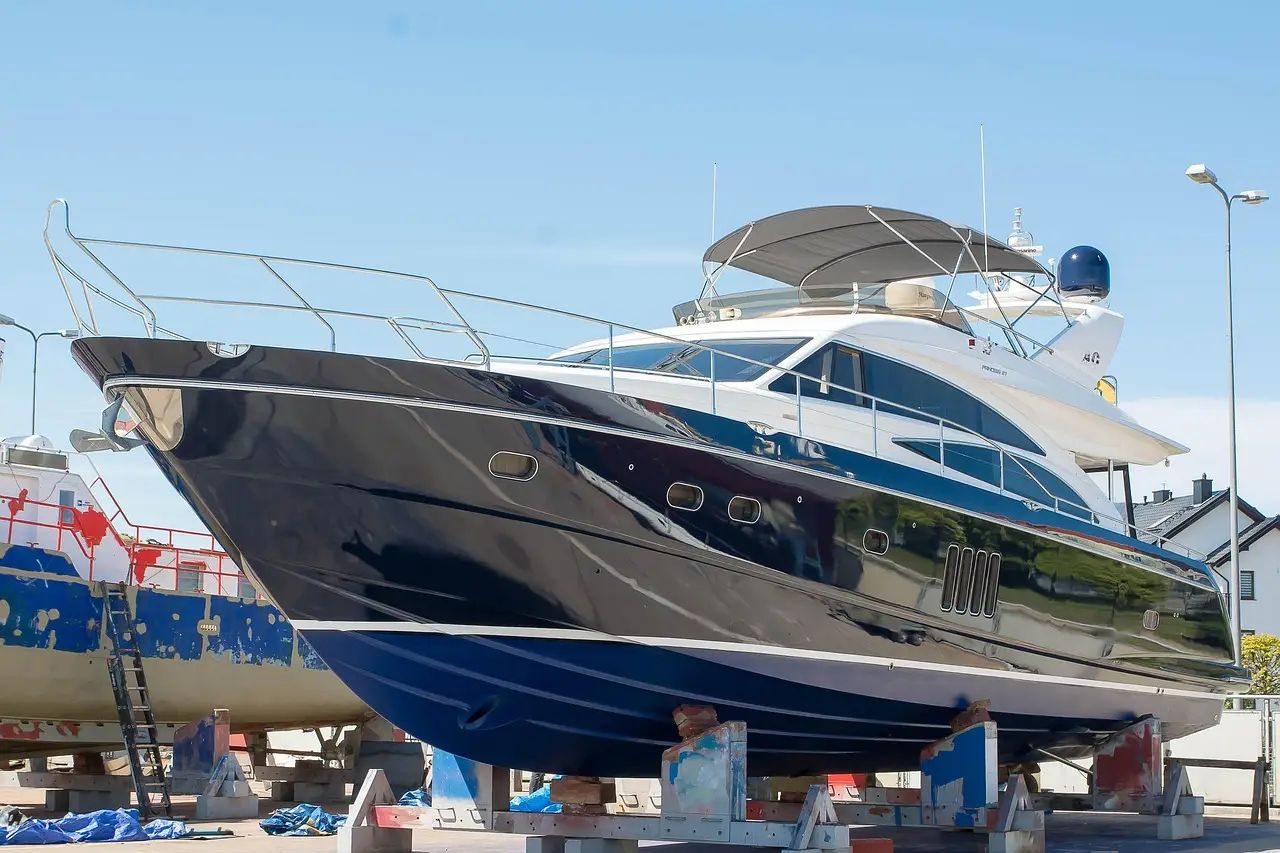
Premier Marinas has stopped lifting, launching or accepting boats coated with silicone antifouling for ashore storage at all 22 of its UK sites, after a vessel secured on land gradually shifted this summer.
The group took the decision in September. It has not named the coating on the affected boat, nor confirmed it fell from its cradle — only that it moved while blocked ashore.
"An incident at one of our boatyards this summer prompted us to reassess how we handle vessels with silicone-based antifouling," a Premier Marinas spokesperson said. "In September, we took a group-wide decision to stop accepting vessels with these coatings for lifting, launching or storage ashore."
The company frames it as an operating-policy issue, not a coating verdict. Responsibility for a safe lift doesn't end when the crane stops. As the spokesperson put it: "We need to be confident that a boat can be lifted and launched safely and that it will remain securely supported for the whole time it is ashore."
What does the stop actually change?
Owners with silicone foul-release coatings now face a practical gap. One Yachting Monthly reader had their Hempel Silic One-coated yacht lifted at a South Coast Premier yard in December 2023 and relaunched in January 2024, then lifted again at Premier Chichester in July 2025 for a short maintenance stop — all without difficulty. A recent booking for a lift-out plus four weeks of ashore storage was cancelled after Premier confirmed it was no longer accepting silicone-coated hulls.
For the coatings side, the scrutiny lands on a segment that has been selling on convenience and environmental credentials. Silicone foul-release coatings work differently from conventional antifouling: they build a smooth, low-friction hull surface so organisms can't adhere, rather than leaching biocides to kill growth.
The same slipperiness that defeats barnacles also defeats lifting straps and shore stands — Practical Boat Owner's biocide-free antifouling guide flags both as trouble points and calls tying sling straps together a sensible precaution. For formulators and yard operators alike, the friction problem is now a liability conversation.
How is the wider market responding?
The industry answer is anything but uniform:
- Yacht Havens' August 2026 terms identify silicone and Teflon antifouling as treatments making lifting, moving and blocking more hazardous. Customers must disclose them, and vessels unsuitable for conventional shores or stands may require a cradle.
- Its dry-stack operations at Haven Quay Lymington and Yacht Haven Quay Plymouth charge a 50 per cent surcharge on lifting charges for silicone- or Teflon-coated hulls.
- Beaulieu River's 2026 boatyard application asks customers to declare silicone or Teflon antifouling.
- MDL Marinas had not responded to enquiries at time of publication.
In short, some operators price the risk, some disclose it, and one large chain has stopped accepting it outright.
What does Hempel's own guidance say?
Hempel's technical literature already acknowledges the lifting hazard. Its Yacht Pro Underwater System Manual (pages 52-53, 2024) includes a dedicated section on lifting silicone-coated hulls, recommending:
- plastic sheathing on lifting straps to limit lateral pressure on the coating;
- protective blocks beneath the rub rail or chine, with spreader blocks above;
- straps kept as vertical as possible;
- fore and aft straps connected with a sling or suitably rated strap to stop them separating mid-lift.
The manual is explicit that responsibility for safe lifting and movement sits with the yard or customer, not the coatings maker. The consumer-facing Silic One guide (page 10, 2023/24) gives the same bottom line in its Q&A: secure the lifting straps together so they can't spread apart.
Hempel did not respond when asked whether marina chains or owners had approached it directly for clarification. The company launched Infinity in 2024 as a no-sanding, no-masking recharger for Silic One — marketing director (yacht) Thomas Olsen said at the time: "We want people out sailing. We don't want them standing around fixing boats."
Premier says its team is working directly with coatings and boat-storage equipment manufacturers, feeding yard experience into discussions on whether equipment or working-practice changes could make these vessels safe to handle at every stage. Services resume only, the spokesperson said, once teams can "consistently put the necessary measures into practice to protect people and minimise the risk of damage to vessels in our care."
For now, a biocide-free hull is a hull some UK yards won't touch.
via Google News — Coatings Industry (Source)
More from Marcus Bennett
Show full bio
Correspondent covering money, funding and market shifts around Chemicals Weekly is the trade press at Chemicals Weekly.
80 articles