TEST RECORD
- DATE
- November 26, 2026
- DESK
- PETROCHEMICALS
- READ TIME
- 3 MIN
- WORDS
- 631
S-Oil Completes 9.3 Trillion Won Shaheen Plant as Seoul Keeps Its Distance
S-Oil's 9.258-trillion-won Shaheen Project is done, adding 3.2m t/y of petrochemical capacity — including 1.8m t/y of ethylene — just as Korea targets net cracker cuts of only 690,000 tons.
SPECIFICATION
- 1
S-Oil completed the 9.258-trillion-won Shaheen Project at the Onsan complex in Ulsan, the largest single foreign investment in South Korea's history.
- 2
Commercial operations from next year add 3.2 million tons per year of petrochemical capacity, including 1.8 million tons of ethylene, using the first commercial thermal crude-to-chemicals (TC2C) technology.
- 3
Approved naphtha cracker cuts of 2.49 million tons in Daesan and Yeosu, minus Shaheen's 1.8 million tons of ethylene, leave a net capacity reduction of just 690,000 tons.
- 4
Prime Minister Han Seong-sook skipped the ceremony; Aramco CEO Amin Nasser attended after PIF governor Yasir al-Rumayyan's trip was canceled following the attack on PIF headquarters in Riyadh on 24 October.
- 5
Industry Minister Kim Jung-kwan told petrochemical executives on the 23rd: "I ask that you wrap up the restructuring discussions within this year so we do not miss the window."
S-Oil has completed the 9.258-trillion-won Shaheen Project, the largest single foreign investment ever recorded in South Korea, without the prime minister who had been scheduled to appear at the ceremony.
Prime Minister Han Seong-sook's official schedule listed the event, held at the Shilla Hotel in Seoul on the 25th to mark both S-Oil's 50th anniversary and the project's completion, but Industry Minister Kim Jung-kwan attended instead. Park Jung-sung, the ministry's trade negotiations chief, was also on the guest list and did not appear.
The Saudi side saw a last-minute change too. Yasir al-Rumayyan, governor of the Public Investment Fund and chairman of Aramco, S-Oil's largest shareholder, canceled his trip to Seoul after the PIF headquarters in Riyadh came under attack on the 24th local time, in an assault attributed to Yemen's Houthi rebels. Riyadh sent its vice minister for oil and gas affairs in his place, and Aramco was represented by Chief Executive Amin Nasser.
The prime minister's office said the change reflected diplomatic protocol matching the rank of attendees once the PIF governor's visit fell through.
What does Shaheen actually add?
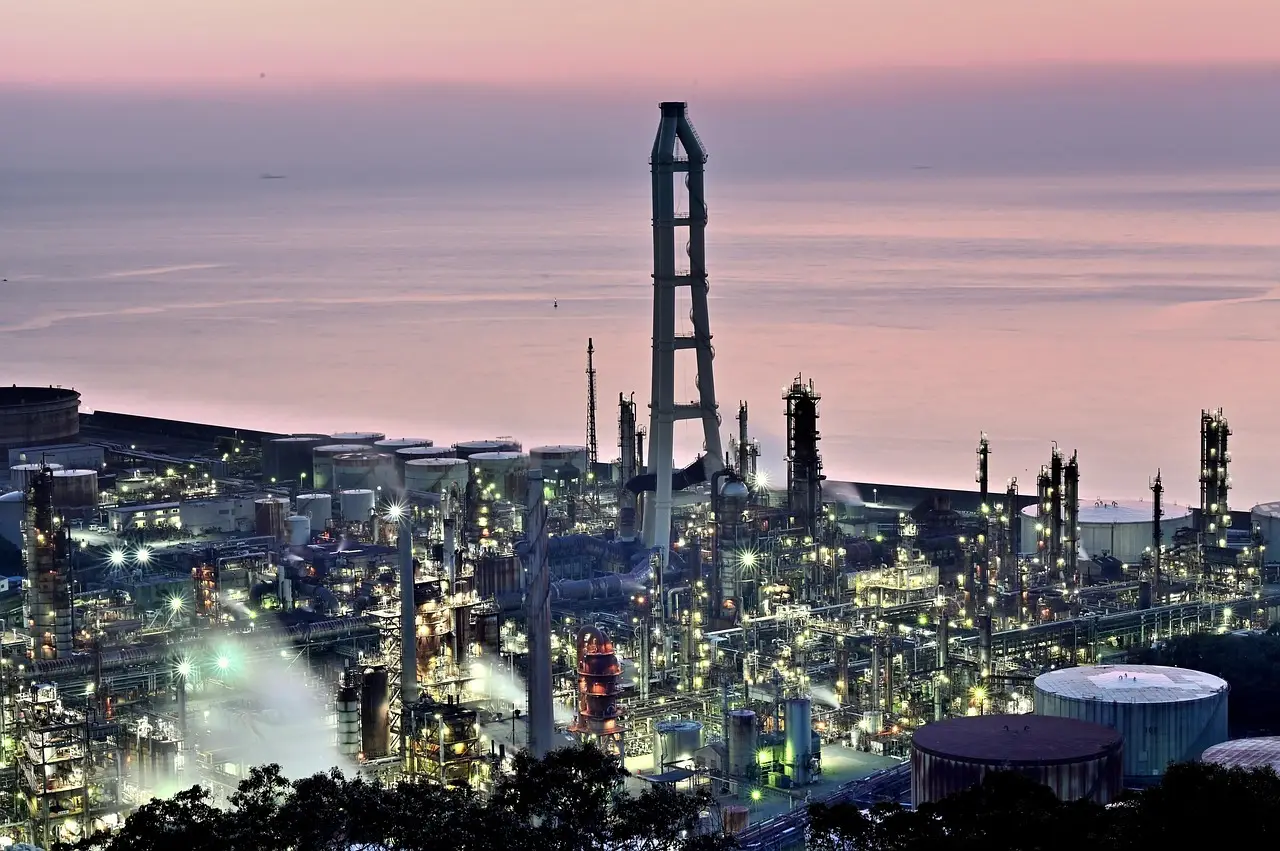
The project built petrochemical production facilities on an 880,000-square-meter site at the Onsan National Industrial Complex in Ulsan. It is the world's first commercial application of thermal crude-to-chemicals, or TC2C, technology — a process converting crude oil and low-value residual oil directly into petrochemical feedstock, bypassing conventional cracking routes.
Once commercial operations begin next year, S-Oil's petrochemical output capacity will rise by 3.2 million tons per year, including 1.8 million tons of ethylene.
The contrast with the project's launch is stark. The investment plan was formalized during Saudi Crown Prince Mohammed bin Salman's visit to Seoul in November 2022, and then-President Yoon Suk-yeol attended the groundbreaking in Ulsan in March the following year. When S-Oil opened a 5-trillion-won integrated petrochemical facility in 2019, then-President Moon Jae-in sat side by side with the crown prince. Shaheen is nearly double that amount.
Why did senior officials stay away?
Analysts pointed to the government's own restructuring agenda. Seoul and the domestic industry are pursuing cuts of 2.7 million to 3.7 million tons per year in naphtha cracking capacity in response to oversupply from China, and officials in and around the government reportedly felt unease about senior figures celebrating a capacity expansion while asking petrochemical companies to share the pain.
The arithmetic is tight. Capacity reductions approved so far in Daesan, South Chungcheong Province, and Yeosu, Jeonnam-Gwangju Special Metropolitan City, total 2.49 million tons. Subtracting Shaheen's 1.8 million tons of new ethylene capacity leaves a net reduction of just 690,000 tons. Rivals that must idle plants and redeploy workers have complained that capacity is being added back just as they finish cutting.
Two days before the ceremony, on the 23rd, Industry Minister Kim summoned executives from petrochemical companies including S-Oil and SK Innovation (096770) and urged them to accelerate the restructuring. "I ask that you wrap up the restructuring discussions within this year so we do not miss the window," he said.
What happens in Ulsan now?
The Ulsan petrochemical complex, home to S-Oil, SK Geo Centric and Korea Petrochemical Industrial, has yet to conclude those talks amid disagreement over which facilities to cut and by how much. The event was difficult for the government both to showcase as a foreign investment success and to ignore outright.
The industry's attention now turns to what role S-Oil will play in the Ulsan restructuring talks, which must be settled before the end of the year.
via Google News — Petrochemicals (Source)
More from Rebecca Stone
Show full bio
Market editor covering regulation, policy and their impact on Chemicals Weekly is the trade press at Chemicals Weekly.
66 articles