TEST RECORD
- DATE
- November 25, 2026
- DESK
- PETROCHEMICALS
- READ TIME
- 3 MIN
- WORDS
- 697
S-Oil's $6.9bn Shaheen Complex Opens in Ulsan as Aramco Chairman Stays Home
S-Oil inaugurates the $6.9bn Shaheen complex in Ulsan — 1.8m t/y of ethylene via first commercial TC2C plant — while Aramco chairman Al-Rumayyan's absence goes unexplained.
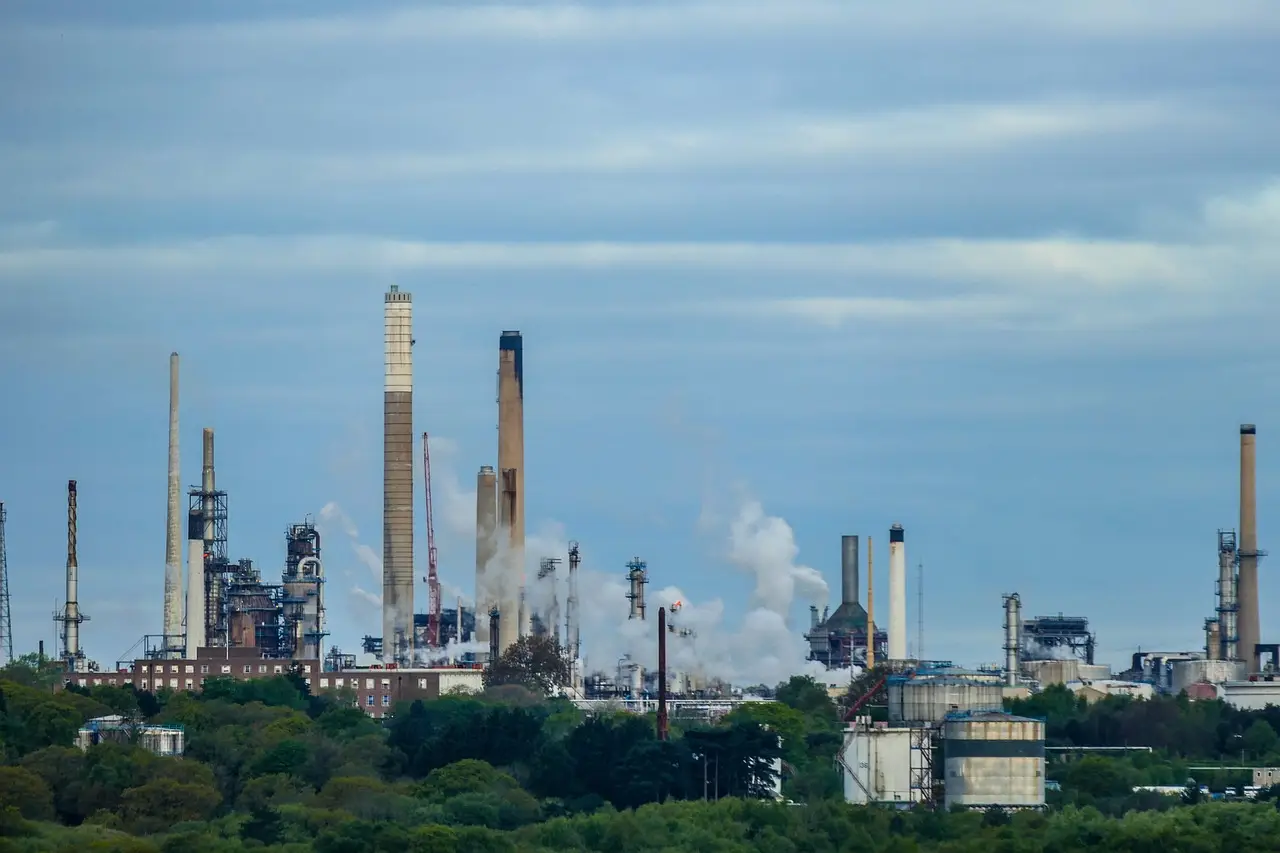
SPECIFICATION
- 1
Shaheen cost 9.258 trillion won (~$6.9bn), South Korea's largest petrochemical investment.
- 2
Steam cracker capacity: 1.8m t/y ethylene; up to 3.2m t/y total petrochemicals.
- 3
First commercial-scale Thermal Crude-to-Chemicals (TC2C) plant, co-developed with Lummus.
- 4
Aramco chairman Al-Rumayyan missed the November 25 ceremony; no confirmed reason.
- 5
Commercial operations targeted for H1 2027; Saudi crude share of Korean imports rose to ~40%.
- 6
Aramco owns 63.43% of S-Oil.
S-Oil's $6.9 billion Shaheen petrochemical complex was inaugurated in Seoul on November 25 — without Aramco chairman Yasir Al-Rumayyan, whose absence remains unexplained. Aramco CEO Amin Nasser led the Saudi delegation instead, alongside Downstream President Mohammed Y. Al-Qahtani.
The numbers are the story. Shaheen cost 9.258 trillion won and is the largest petrochemical investment in South Korea's history. Its steam cracker — described by Korea JoongAng Daily as the world's largest single-train unit — will produce 1.8 million tonnes of ethylene per year, plus propylene and butadiene. Nasser said the complex can produce "up to 3.2 million tons of petrochemicals per year."
About 500 guests attended the ceremony at The Shilla Hotel. A separate site event took place on November 24 at the Onsan National Industrial Complex in Ulsan, where the plant stands on 880,000 square meters.
Why did Al-Rumayyan miss it?
Two Korean outlets reported the cancellation, and they disagreed. Asia Economy, citing unnamed industry sources, wrote that his attendance "became difficult due to the airport closure in Saudi Arabia" — hedged reporting language, not an on-record statement. Newspim said only that "urgent circumstances" kept him away, without elaborating. Neither Aramco nor the Saudi government has confirmed any explanation.
The airport reference points to Riyadh's King Khalid International Airport, operating under restrictions since October. Attacks between October 6 and 11 killed at least 14 people; the airport reopened October 25 to prior-permission flights. As of November 25, Terminal 1 handled domestic flights, Terminal 2 served international flights by Saudi carriers, and Terminal 3 stayed closed. British Airways, Lufthansa, Air France, KLM and Cathay Pacific have suspended Riyadh services through late 2026 or early 2027.
South Korean Prime Minister Han Seong-sook also skipped the event, sending Industry Minister Kim Jung-kwan, for unstated reasons. So the absence cuts both ways. What does this change for buyers? Nothing yet — Aramco kept senior leadership on the road, and the supply message stayed firm.
What does Shaheen actually build?
The complex is the world's first commercial-scale deployment of Thermal Crude-to-Chemicals (TC2C), a process Aramco co-developed with US-based Lummus Technology. It converts crude oil directly into olefins, skipping the conventional cracking-feedstock chain.
Nasser called it Aramco's largest investment in South Korea and named Ulsan "an ideal location for expanding in Asia," tying the project to demand from electric vehicles, semiconductors and digital infrastructure. Petrochemicals will rise from 12% of S-Oil's output now to 25% at full operation. Commercial operations are targeted for the first half of 2027. SABIC, an Aramco affiliate, will handle overseas marketing of the polyethylene. Construction consumed 6.5 million cumulative person-days between the March 2023 groundbreaking and completion.
S-Oil Board Chairman Kwon O-kyu called the project "the starting point of a new leap forward" and said S-Oil "has firmly established itself as a fully integrated refining and petrochemical company."
What did the supply message say?
Saudi assistant energy minister Mohammed bin Abdulrahman Al-Ibrahim told guests that Saudi crude supplied about 35% of South Korea's crude imports in 2025, roughly 950,000 barrels per day, rising to about 40% between January and October 2026. "We will honor our commitment to ensuring a stable and reliable supply of crude oil to South Korea," he said.
Kim thanked Saudi Arabia for "prioritizing crude and naphtha supplies to Korea during the Middle East conflict" — a signal that Seoul values Saudi naphtha for its steam crackers as well as its refineries.
The shareholding backdrop
Aramco bought about 35% of the company in 1991, then called SsangYong Oil Refining, and took majority control in 2015 by buying Hanjin Energy's stake, reaching the current 63.43%. The final investment decision was signed on November 16, 2022, during Crown Prince Mohammed bin Salman's Seoul visit. S-Oil, founded in 1976, has invested more than 14 trillion won in Korean infrastructure over the past decade, with Shaheen the largest single project.
Al-Rumayyan's no-show, whether from airport disruption or "urgent circumstances," remains unconfirmed. The plant itself is not in question.
via Google News — Petrochemicals (Source)
More from Sophie Lindqvist
Show full bio
News editor covering regulation, policy and their impact on Chemicals Weekly is the trade press at Chemicals Weekly.
61 articles