TEST RECORD
- DATE
- November 25, 2026
- DESK
- PETROCHEMICALS
- READ TIME
- 3 MIN
- WORDS
- 631
S-OIL Completes $9.258 Trillion Won Shahin Project in Ulsan
S-OIL completes the 9.258-trillion-won Shahin Project in Ulsan: world's largest steam cracker, crude-to-chemicals TC2C unit, 3.2 million t/y added capacity, chemicals share doubling to 25%.
SPECIFICATION
- 1
Total investment: 9.258 trillion won at Ulsan Onsan National Industrial Complex
- 2
Added capacity: ~3.2 million tonnes/year of petrochemicals once operational
- 3
Petrochemical share of production rises from 12% to 25%
- 4
TC2C converts crude directly to olefins/aromatics, bypassing atmospheric and vacuum distillation
- 5
Commercial operations targeted by next year after trial runs
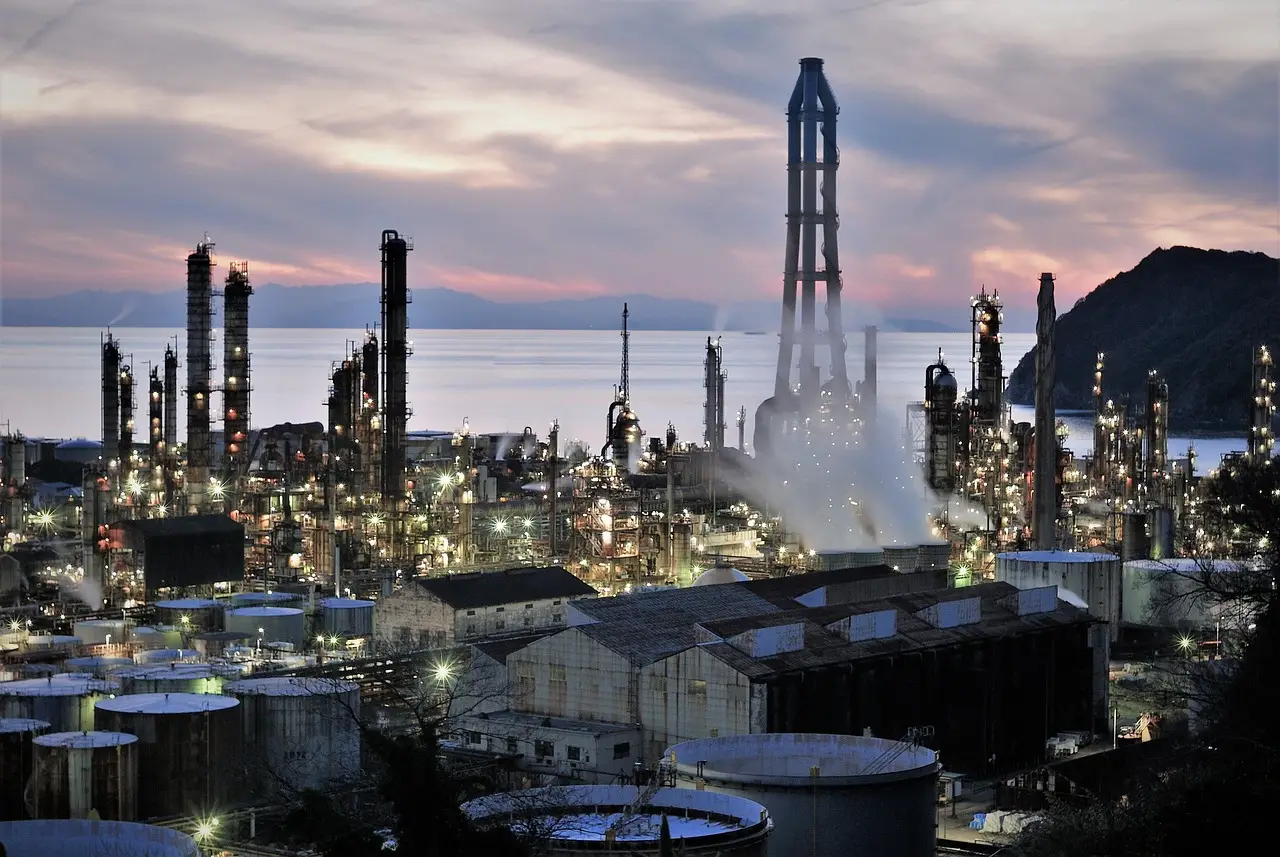
S-OIL has completed the Shahin Project, a 9.258-trillion-won (roughly $6.5 billion) integrated refining-petrochemical complex at the Ulsan Onsan National Industrial Complex that adds about 3.2 million tonnes per year of petrochemical capacity and doubles chemicals to 25% of the company's output mix.
The company marked completion — and its 50th anniversary — with a ceremony on the morning of the 25th at the Shilla Hotel in Jung-gu, Seoul. More than 500 people attended, including Trade, Industry and Energy Minister Kim Jung-kwan; Mohammed bin Abdulrahman Al-Ibrahim, Deputy Minister of Petroleum and Gas at Saudi Arabia's Ministry of Energy; Aramco President and CEO Amin H. Nasser; Aramco Downstream President Mohammed Y. Al-Qahtani; and S-OIL CEO Anwar Al-Hijazi.
What does Shahin actually build?
The project's core is three things: the world's largest steam cracker, a TC2C integrated refining-petrochemical unit, and polymer production facilities.
TC2C is the piece worth your attention. It converts crude oil directly into basic petrochemical feedstocks — olefins and aromatics — skipping conventional refining steps such as atmospheric and vacuum distillation towers. In plain terms, S-OIL no longer has to run crude through the fuels chain to get cracking feedstock; the crude-to-chemicals shortcut lifts crude utilization and cuts the cost and complexity of producing petrochemical feedstocks.
Commercial operations are planned to start by next year, following trial runs.
Why the mix shift matters
Once Shahin is fully on stream, petrochemicals' share of S-OIL's overall production is expected to more than double from the current 12% to 25%. That is the whole strategy in one number: a refining-heavy producer rebalancing toward chemicals to diversify revenue and reduce exposure to swings in crude prices and refining margins.
For anyone buying olefins or aromatics in Asia, that is roughly 3.2 million tonnes a year of additional product entering the regional balance out of Ulsan.
What the Korean and Saudi sides said
The ceremony doubled as a display of the Korea-Saudi energy relationship. Minister Kim said: "Even amid the unstable energy supply chain caused by the Middle East war this year, Saudi Arabia has pledged to prioritize supplying crude oil and naphtha to Korea." He added: "The government of the Republic of Korea will support efforts to ensure that investment and cooperation between the two countries lead to greater achievements and results."
Deputy Minister Al-Ibrahim framed energy as the anchor of the broader tie: "The relationship between Saudi Arabia and Korea has grown on the foundation of mutual trust and economic cooperation, with energy always serving as a core pillar." He noted that as the two countries deepen cooperation in automotive and construction materials, petrochemicals' role keeps growing.
Aramco, S-OIL's largest shareholder, positioned the project as a strategic foothold. CEO Nasser said: "Ulsan, where the Shahin Project is located, is the optimal place for Aramco to expand its presence in Asia, which is set to become the center of future energy demand growth." He added: "The Shahin Project will support Korea's key industries, including electric vehicles, semiconductors, and digital infrastructure."
Fifty years from Han-Es Oil to crude-to-chemicals
The completion lands on S-OIL's 50th anniversary. The company began as Han-Es Oil (Korea-Iran Petroleum Co., Ltd.), established in 1976 with equal 50% stakes from Ssangyong Cement, then part of the Ssangyong Group, and the National Iranian Oil Company. Aramco took an equity position in 1991, strengthening the company's growth base, and the current S-OIL structure took shape after the separation from the Ssangyong Group in 2000.
The takeaway: a refiner backed by Aramco just moved a big chunk of its barrel straight into chemicals, and the Asian olefins market will feel it.
via Google News — Petrochemicals (Source)
More from Marcus Bennett
Show full bio
Correspondent covering money, funding and market shifts around Chemicals Weekly is the trade press at Chemicals Weekly.
73 articles