TEST RECORD
- DATE
- November 25, 2026
- DESK
- PETROCHEMICALS
- READ TIME
- 4 MIN
- WORDS
- 764
S-Oil completes $6.3bn Shaheen petrochemical complex in Ulsan
S-Oil’s $6.3 billion Ulsan complex awaits completion of test runs, with early-next-year startup set to add 1.8Mt/y of ethylene capacity and lift petrochemicals to 25% of output.
SPECIFICATION
- 1
S-Oil completed the $6.3 billion Shaheen Project after construction began in March 2023.
- 2
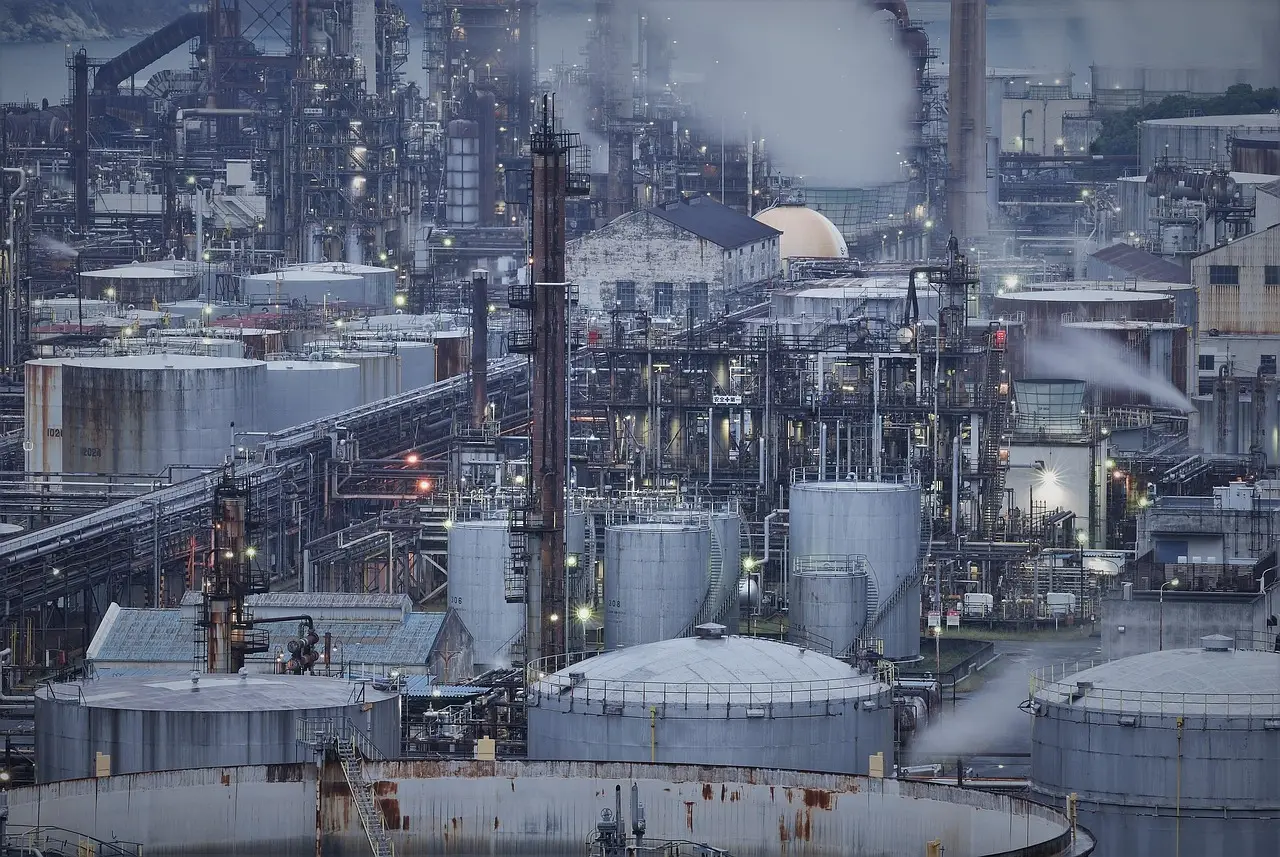
The 880,000-square-metre complex includes the world’s largest steam cracker.
- 3
Full operation early next year will add 1.8 million tonnes a year of ethylene-basis capacity.
- 4
Petrochemicals will rise from 12% to 25% of S-Oil’s output.
- 5
Annual import replacement is estimated at $770 million, while Ulsan economic value is put at $87 million.
S-Oil (010950.KS) has completed the 9.26 trillion won ($6.3 billion) Shaheen Project in Ulsan, South Korea’s largest single petrochemical investment. The company expects the complex to displace more than 1 trillion won of annual imports and add more than 100 billion won a year in benefits to the local economy.
What did S-Oil build in Ulsan?
Construction began in March 2023 and finished about three years and eight months later. The complex stands at the Onsan National Industrial Complex in Ulsan.
- Site: 880,000 square metres, roughly 123 times the area of a soccer field.
- Power system: A power cable running through the complex stretches about 8,300 kilometres.
- Materials: The project used 94,000 tonnes of reinforcing steel, equivalent to the weight of 14 Eiffel Towers.
- Core facilities: The world’s largest steam cracker, a thermal crude-to-chemicals unit and polymer production plants.
S-Oil said Shaheen marks the first commercial application anywhere of TC2C technology, which Aramco developed with Lummus Technology. The route turns crude oil directly into petrochemicals. Industry officials said it should give Korean buyers a cost base for competing with cheaper Chinese products.
Takeaway: Shaheen puts crude-to-chemicals conversion into commercial operation at industrial scale.
When will it start, and what will it produce?
S-Oil plans to begin full operation early next year after test runs finish.
- New capacity: 1.8 million tonnes a year on an ethylene basis.
- Output mix: Petrochemicals will rise to 25% of S-Oil’s output from 12%, more than doubling their share.
The steam cracker will produce basic olefins including ethylene, propylene and butadiene. Part of the ethylene will feed the polymer plant, which will make products such as polyethylene for sale in South Korea and abroad.
Overseas sales will run through SABIC’s global network; SABIC is an Aramco affiliate. S-Oil said the arrangement secures sales channels from the start of production, while SABIC will sell Shaheen polyethylene through its own network. The companies also expect the tie-up to strengthen their operating synergies.
Takeaway: Early-next-year startup will raise petrochemicals to one-quarter of output and secure an export channel.
Who attended the completion ceremony?
S-Oil marked the plant’s completion and its own 50th anniversary at a ceremony at the Shilla Hotel in Seoul’s Jung-gu district. Attendees included:
- Trade, Industry and Energy Minister Kim Jung-kwan.
- Mohammed bin Abdullah Al-Ibrahim, Saudi Arabia’s vice minister of energy for oil and gas.
- Amin H. Nasser, Aramco president and chief executive.
- Mohammed Al-Qahtani, Aramco’s downstream president.
Nasser, whose company is S-Oil’s largest shareholder, travelled to South Korea for the ceremony. He said: “A new landmark standing 118 meters at its highest point has risen in Ulsan. With capacity to produce up to 3.2 million tons of petrochemical products a year, it will support core Korean industries including electric vehicles, semiconductors and digital infrastructure.”
Kim linked the commercial project with wider government cooperation. He said: “If the past 50 years were a history of friendship in which we helped each other grow, the next 50 will be a history of shared prosperity in which we open a bigger future together.” He added: “I am confident the Shaheen Project will be an important model of that.”
Takeaway: The ceremony paired a commercial plant with a broader Saudi-Korean supply relationship.
What changes for feedstock buyers?
Saudi Arabia supplied about 40% of South Korea’s total crude imports from January through October this year, Al-Ibrahim said. He said the kingdom would maintain stable, continuous crude supply to Korea and preserve trust between the two countries. Officials from both governments said the project would deepen government cooperation beyond the private sector.
Domestically, Shaheen will supply olefin monomers by pipeline to downstream petrochemical producers in the Ulsan area. Those plants previously relied on imports because of a shortage of basic olefins; direct supply should cut logistics costs and provide steadier feedstock access.
- Import replacement: About $770 million (1.03 trillion won) a year.
- Ulsan economic value: Roughly $87 million (116.7 billion won) a year, supporting the region’s industrial ecosystem.
The economics come with a supply-side risk. Industry officials warned that large-scale additions could worsen petrochemical oversupply while companies restructure around cuts to naphtha cracking centres. TC2C should lower Korean producers’ costs, but the new output will also reach an already loose market.
Takeaway: Ulsan buyers gain cheaper, steadier feedstock just as petrochemical oversupply pressures the region’s cracking system.
via Google News — Petrochemicals (Source)
More from Amara Osei
Show full bio
Senior reporter covering people, launches and day-to-day practice in Chemicals Weekly is the trade press at Chemicals Weekly.
53 articles