TEST RECORD
- DATE
- November 19, 2026
- DESK
- PETROCHEMICALS
- READ TIME
- 2 MIN
- WORDS
- 467
Drones Hit Gazprom Neftekhim Salavat, Fires Burn at Primary Unit
Drones struck Gazprom Neftekhim Salavat in Bashkortostan on Nov. 17, sparking fires at a primary processing unit, one day after the EU blacklisted the plant among 101 entities.
SPECIFICATION
- 1
Drone strikes hit Gazprom Neftekhim Salavat on Nov. 17, igniting fires at a primary processing unit.
- 2
EU added the complex to its sanctions blacklist on Nov. 16, alongside 101 entities and 12 individuals.
- 3
The Bashkortostan site, founded in 1948, produces more than 150 product lines including polyethylene, styrene, urea and ammonia.
- 4
At least 15 impacts were reported on the Crimean Bridge overnight into Nov. 17, the second strike there in 24 hours.
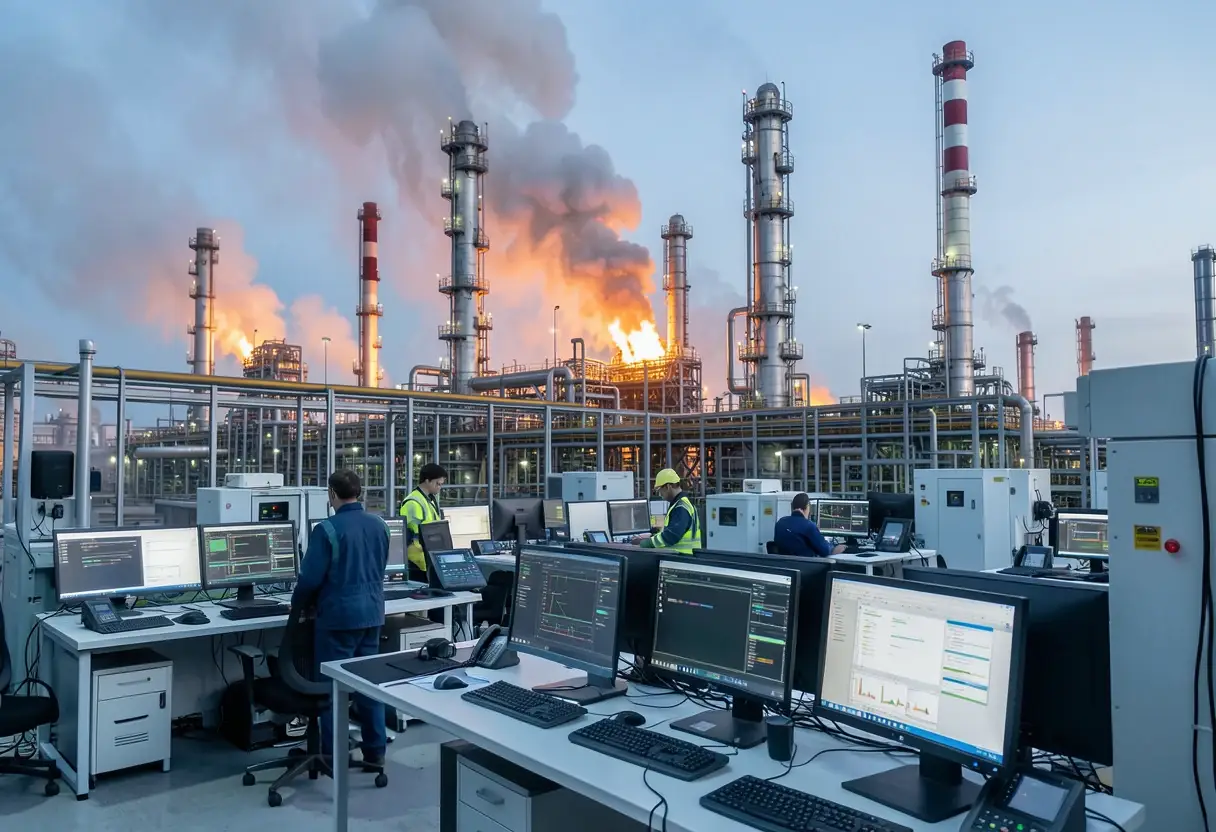
Drone strikes hit Gazprom Neftekhim Salavat, one of Russia's largest refining and petrochemical complexes, on Nov. 17, igniting multiple fires across the site in the Republic of Bashkortostan, according to the OSINT group Exilenova+.
The strike struck one of the facility's primary processing units (the first distillation stage that separates crude into refinery feedstreams). Eyewitness video footage circulating on Telegram shows several active fire outbreaks across the industrial site. Authorities and analysts are still clarifying the extent of structural damage and the operational fallout. No throughput loss, outage duration or force-majeure declaration has been confirmed so far — a gap buyers of Russian-origin gasoline, diesel, polyethylene, styrene, urea and ammonia should note before repricing contracts.
What does the timing mean?
The raid came exactly one day after the European Union moved against the plant. On Nov. 16, the Council of the EU added Gazprom Neftekhim Salavat to its sanctions blacklist alongside 101 legal entities and 12 individuals, with the restrictions taking effect the same day. The double blow — sanctions on paper on Sunday, drones on steel on Monday — leaves the complex facing simultaneous legal and physical pressure on its export routes and its production base. Neither event, on its own, tells the market how much volume will actually leave the system.
How big is the asset?
Founded in 1948, Gazprom Neftekhim Salavat is the largest oil-refining and petrochemical complex in southern Bashkortostan. It manufactures more than 150 product lines, ranging from gasoline and diesel fuel to petrochemical staples:
- polyethylene
- styrene
- urea
- ammonia
That breadth matters for the region: the site sits upstream of fertilizer and polymer chains, not just fuel markets. Whether the fire at the primary processing unit forces a full shutdown or only a partial cut remains unverified. Claims of damage from OSINT channels and strike footage routinely outrun confirmed engineering assessments by days.
What else happened overnight?
The same night, into Nov. 17, a series of powerful explosions struck near Kerch in Russian-occupied Crimea. Ukrainian monitoring channels reported a massive strike on the Crimean Bridge involving at least 15 impacts, and authorities temporarily halted motor traffic across the span. The barrage was the second strike on the bridge within 24 hours, following an earlier attack on Nov. 16 reported by Crimea's Russian-installed occupation chief Sergey Aksyonov.
The pattern — petrochemical assets and logistics infrastructure hit in a single overnight window — suggests a coordinated targeting of supply chains rather than isolated strikes. For chemical-industry watchers, the Salavat fire is the operation with direct product-market implications; the Kerch bridge attacks compound logistics risk in the Black Sea region.
Everything now hinges on damage assessment. Until the operator or independent observers confirm the state of the primary unit and downstream lines, any estimate of lost production tonnes is speculation.
via Google News — Petrochemicals (Source)
More from Grace Kim
Show full bio
Staff writer covering money, funding and market shifts around Chemicals Weekly is the trade press at Chemicals Weekly.
46 articles