TEST RECORD
- DATE
- November 19, 2026
- DESK
- PETROCHEMICALS
- READ TIME
- 2 MIN
- WORDS
- 482
Drones hit Gazprom Neftekhim Salavat, one of Russia's biggest petrochemical sites
Ukrainian drones struck Gazprom Neftekhim Salavat, one of Russia's largest petrochemical complexes, on November 17. Over 50 drones targeted Ufa and Salavat; residents report fire.
SPECIFICATION
- 1
Ukrainian drones struck Gazprom Neftekhim Salavat on the night of November 17
- 2
The attack targeted Ufa and Salavat in Russia's Republic of Bashkortostan
- 3
Air defense and security services intercepted more than 50 drones, per regional emergency officials
- 4
The complex produces gasoline, diesel, kerosene and petrochemicals, some supporting Russia's military industry
- 5
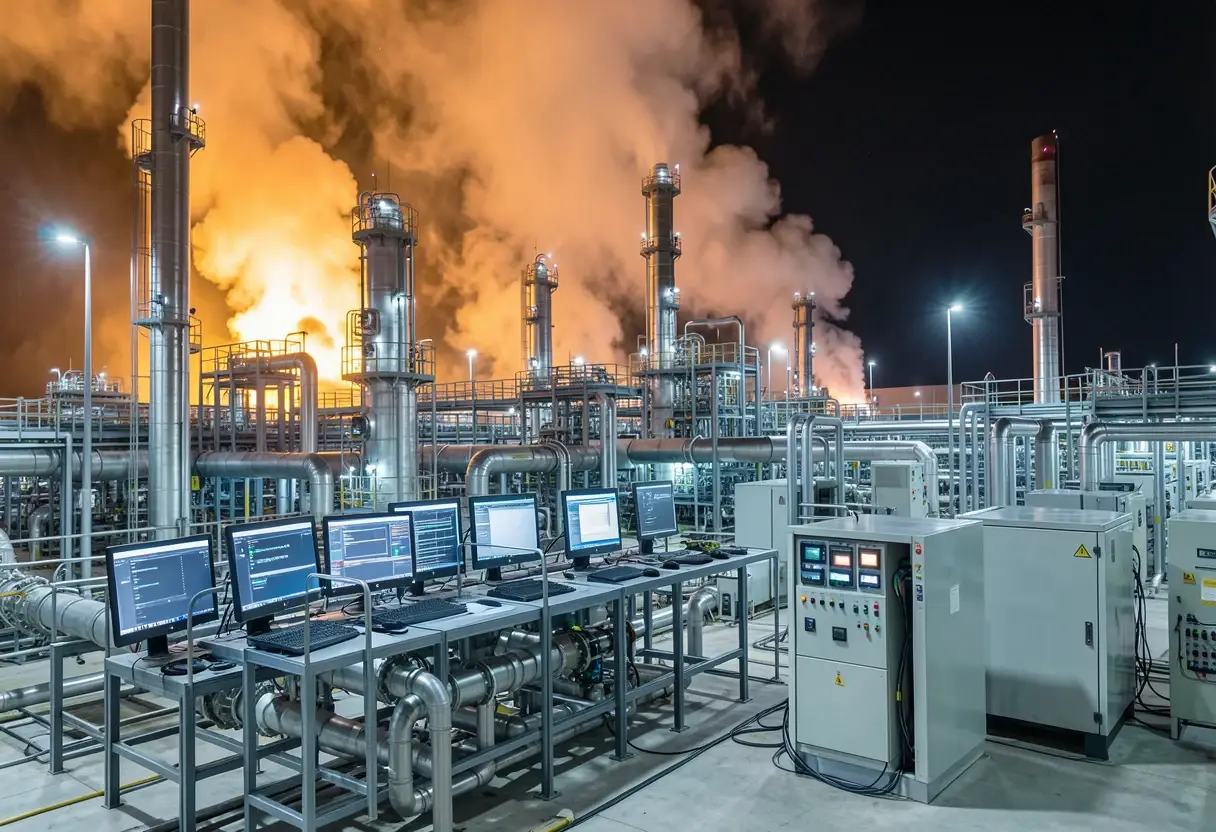
Residents reported explosions and a fire in the industrial zone
Ukrainian drones struck Gazprom Neftekhim Salavat on the night of November 17. The complex is one of Russia's largest petrochemical plants, and it sits in the city of Salavat in the Republic of Bashkortostan, roughly 1,300 km from the front.
The attack targeted two cities: Ufa and Salavat. Bashkortostan's State Committee for Emergency Situations says air defense forces, facility security services, and mobile firing units intercepted more than 50 drones during the night. Despite that interception effort, videos examined by the Astra channel show the petrochemical complex was hit.
What does the plant actually make?
Gazprom Neftekhim Salavat is not a marginal facility. It produces:
- Gasoline
- Diesel fuel
- Kerosene
- A range of petrochemical products
Some of that output also supports the Russian military-industrial sector, which makes the site a strategic target rather than a purely civilian one. For anyone tracking Russian fuel supply chains, this is a name that matters — the complex is a major refining and petrochemical node in the Urals region.
What happened on the ground?
Residents reported explosions and a fire in the industrial zone. That's the extent of the confirmed detail so far. Neither the operator nor Russian authorities have published an assessment of damage to specific units, and there's no official word yet on whether any of the cracking, reforming, or fractionation capacity was knocked out.
That matters because the practical consequences hinge entirely on which units were hit. A fire at a storage tank is a different story from damage to a primary distillation unit or a catalytic cracker. Until satellite imagery or operator statements surface, any capacity estimate is speculation.
What does this change for the market?
For chemical-industry readers, the immediate questions are supply and logistics. Salavat is a significant regional producer of motor fuels and petrochemical feedstocks, and an extended outage would ripple into Russian domestic supply of gasoline, diesel, and kerosene — plus downstream petrochemical products that depend on its output.
The strike also fits a broader pattern: Ukrainian drones have repeatedly reached deep into Russian territory to hit energy and refining infrastructure, well beyond the range of shorter-range systems. Bashkortostan is far from the border, so the attack demonstrates extended-range reach into Russia's industrial heartland.
Watch for three follow-up signals in the coming days:
- Any statement from Gazprom Neftekhim Salavat on unit status or force majeure
- Russian government response on fuel export quotas or domestic supply measures
- Independent satellite or imagery confirmation of the extent of the fire and damage
More than 50 drones launched in a single night against two cities also marks the scale of the operation — this was a coordinated mass attack, not a probing raid. Interception claims from regional authorities don't change the bottom line: videos verified by Astra show the complex itself was struck, with explosions and fire reported by residents in the industrial zone.
via Google News — Petrochemicals (Source)
More from Sophie Lindqvist
Show full bio
News editor covering regulation, policy and their impact on Chemicals Weekly is the trade press at Chemicals Weekly.
53 articles